
A farmer I know, Sam, keeps around 30 Herdwicks in a field opposite my house. They’re part of a bigger ‘flying flock’ of approx. 100 sheep scattered across multiple fields locally, where he has grazing agreements.
As Sam was filling his water troughs, I casually asked him how it was going. I half knew the answer already. But I still wasn’t expecting what he told me.
This summer his bees have made more money than his ewes and lambs. And the reason is a combination of increasing temperatures and diminishing margins.
A summer built for bees, but not grass
The UK is experiencing one of its hottest summers in recent memory. And one of the toughest for farmers and growers. According to the Met Office, spring 2026 was already the warmest on record for England and Wales, and in England June followed suit. Then came summer. By mid-July, the UK had already recorded more days above 30°C than the whole of 1976 and had become the first year on record to see temperatures reach 35°C in May, June and July alike. For England and Wales, it was also the driest July since 1836.
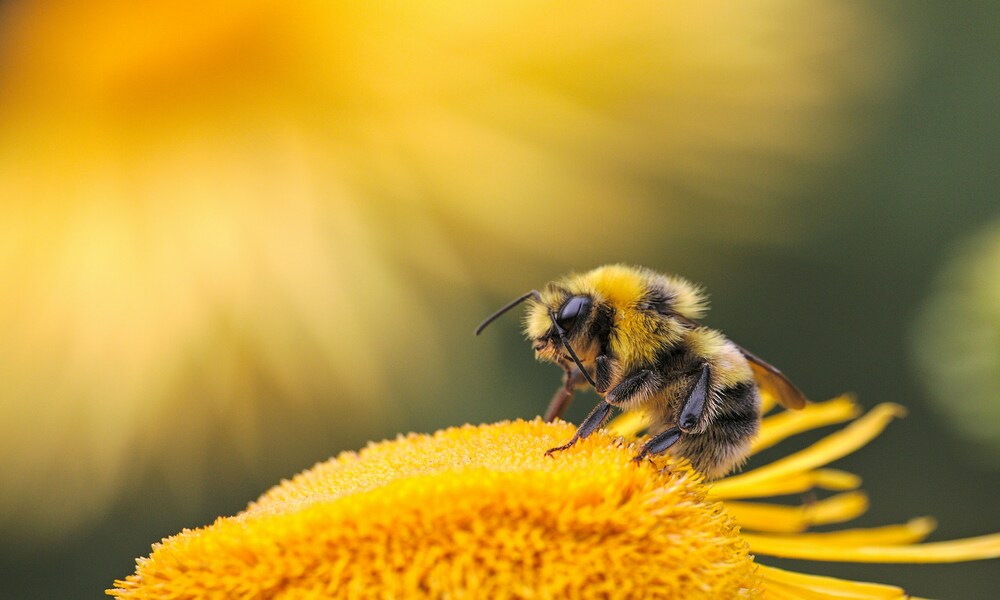
For a beekeeper, that combination of prolonged warmth, sunshine and settled high pressure is close to ideal. Forage plants flower earlier and more prolifically, bees can fly on more days, and nectar flow is sustained rather than interrupted by the cool, wet spells that so often knock a UK honey crop back. Beekeeping forums this season have been full of reports of what one described as “a bumper one all round,” with far more honey pulled off hives than in recent years.
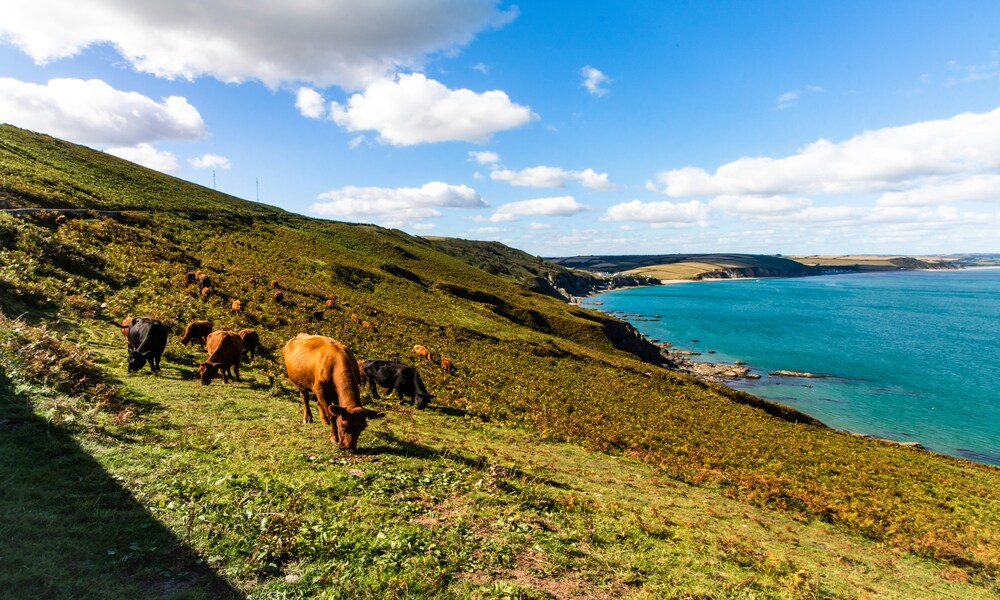
For a grazing livestock system, though, that same weather is bad news. After promising early rain, the extended dry spells have suppressed grass growth, and now Sam, like many sheep farmers, is already looking at browned-off pasture and considering supplementary feed earlier than planned. “It looks like the south of France” he says, surveying his parched field.
Good weather for pollen has certainly not been kind on Sam’s grass.
A bumper crop with bumper prices
Prices for UK honey rose through the bumper crop rather than falling with it, reflecting continued strong retail demand for local and single-origin honey like Sam’s. Current guides for the 2026 harvest put a standard 454g jar of run-of-the-mill blossom honey at £7 to £10 direct to the public, with prized single-forage honeys – heather in particular – commanding £12 to £16 for the same size jar given the extra labour and specialist extraction equipment involved. In bulk, wholesale honey has been trading at roughly £2.80 to £3.10 per lb this season, though buyers note that in tighter years the price has been noticeably higher.
The economics of a small apiary are modest in absolute terms but strikingly efficient relative to the input required. Industry breakdowns suggest a four-hive beekeeper can net in the region of £487 from honey sales alone in a good year, once jars, labels and consumables are accounted for. Scale that up across the 14 hives Sam has, in an exceptional forage year like this one, and the return per hour of labour compares very favourably with a livestock enterprise carrying feed, vet and labour costs across twelve months. Sam’s bees cost nothing to feed. Right now they’re happily gathering pollen from borage, and the ivy and Safflower that grows naturally along the Glyme Valley.
Why the flock hasn’t kept pace
This isn’t a story about the entire sheep sector collapsing. Although Sam’s Herdwick’s are bought by other breeders he also has Hebrideans that should go off in a week or so. At the local market Sam says prices aren’t doing much. But AHDB market data shows UK sheep meat exports up 18% in volume and nearly 25% in value in the first quarter of 2026 alone. So the wider lamb market has been genuinely strong this year.
But Sam’s issue isn’t so much headline price as margin. A prolonged dry summer means grass-fed systems are leaning more heavily on bought-in feed and forage to maintain liveweight gain. Sam is also spending more time travelling between flocks to check on the water troughs. Those extra costs, plus any losses from a demanding lambing period, can quietly erode the benefit of a strong market, in a way that a low-input, low-labour apiary simply doesn’t experience in a favourable year.
A seasonal story, not a structural one
It would be wrong to read too much into a single farmer’s comparison between two very different enterprises in one unusual year. Sheep farming remains underpinned by robust export demand and a contracting national flock that continues to support prices, while beekeeping income of this scale is heavily dependent on weather that won’t repeat every season — 2026’s combination of record warmth, sunshine and drought is exceptional even against a backdrop of increasingly hot UK summers.
But it’s a useful illustration of how diversification can pay off in years when the two enterprises pull in opposite directions. A hive that thrives precisely when pasture struggles offers a natural hedge against the kind of summer more UK farms are now experiencing with increasing regularity.
There’s no one quite like British farmers…
Displaying typical farmer resilience I’ll leave the last word to Sam. “The situation’s not great. But I’m doing the job I love and at least I’ve got loads of honey.”
Where would we be without our farmers?
Figures on lamb and sheep meat trade are drawn from AHDB market reporting; honey pricing reflects current UK retail and wholesale guides for the 2026 harvest. Weather stats are provisional Met Office data for summer 2026.