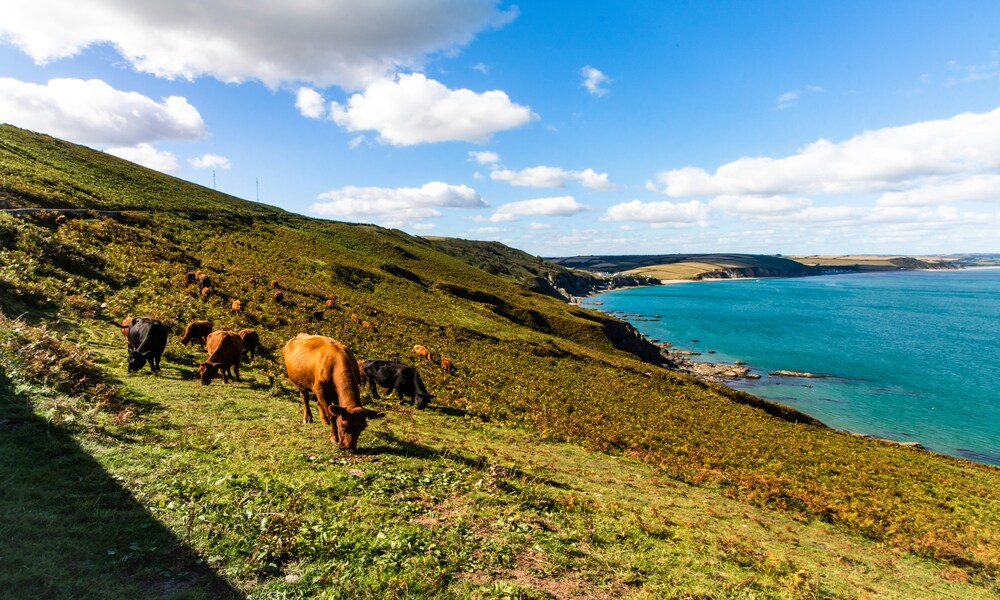


In June, farming’s focus switched to Whitehall. There was one landmark government announcement – the Farming Roadmap 2050 – followed by the long-awaited launch of a reformed SFI. Back on the farm, hope was hanging on much-needed rainfall in early June boosting harvest prospects, but the picture overall is mixed. But the month began with a feel-good story, when farming found itself at the centre of one of the nation’s biggest TV moments, as a choir of farmers won Britain’s Got Talent.
Farming Roadmap 2050 published
On 24 June, Environment Secretary Emma Reynolds unveiled the ‘Farming Roadmap 2050: Growing England’s Future’ alongside the government’s response to Baroness Minette Batters’ Farm Profitability Review. The 25-year strategy commits £123 million for agricultural innovation in 2026/27, £345 million in grants for equipment and technology to 2036 and at least £300 million for Natural Flood Management. The Seasonal Worker visa route is confirmed to continue to at least 2030, and a new Farming and Food Partnership Board will be chaired by Baroness Batters.
Industry reaction was cautiously positive but pointed. NFU President Tom Bradshaw welcomed the focus on resilience, profitability and productivity, but warned the plan “falls short on action and even shorter on the means of delivery”, calling for a stronger partnership between Defra, the Treasury and farmers. CLA President Gavin Lane acknowledged the ambition while stressing that for many farmers the immediate challenge was simply staying profitable: “Without profitable farm businesses, the government’s ambitions for food production and nature recovery simply will not be achieved.”
SFI 2026 launches with a new structure
The first application window for the reformed Sustainable Farming Incentive 2026 (SFI26) opened on 30 June. Window 1 is initially available to small farms (3–50ha) and farms without an existing Environmental Land Management agreement. Reynolds said the staged approach was designed to address a longstanding imbalance — noting that under the previous scheme, a quarter of the funding had gone to just 4% of farms.
The scheme has been simplified from 102 actions to 71. A budget of £60 million is allocated to Window 1, with Window 2 — open to all eligible farmers in September — carrying a base budget of £180 million. Each farm business is limited to one SFI26 agreement, capped at £100,000 per year. The NFU cautioned farmers with existing SFI24 agreements to consider carefully before applying, given the one-agreement rule.
Early Bird Survey paints a mixed harvest picture
AHDB’s Early Bird Survey, compiled from returns covering around 600,000 hectares across nearly 70 agronomy firms, put the 2026 planted area in a broadly better position than recent seasons — but with one notable weak spot. While winter wheat and oilseed rape had all expanded their coverage, barley told a different story, with the total barley area down 10% to a 15-year low. On crop condition itself, winter wheat started spring well at 82% good or excellent in late March, but had slipped to 64% by late May following a dry April and May. Winter OSR held up more strongly at 78% good or excellent — well ahead of 52% at the same point in 2025. With AHDB’s final condition report due, the outcome for wheat in particular was still heavily dependent on whether the early June rainfall was enough to protect yield potential through grain fill.
Hawkstone Farmers’ Choir wins Britain’s Got Talent
In what was arguably the feel-good farming story of the year, the Hawkstone Farmers’ Choir was crowned the winner of Britain’s Got Talent 2026 in the live final broadcast on 30 May — becoming the first choir in the show’s history to take the title. The 30-strong choir, originally brought together by Jeremy Clarkson to support the mental health of farmers, received more than one million public votes to claim the £250,000 prize and a place at the Royal Variety Performance.
Their winning performance of an original song ‘This Is Home’ was a risk that paid off spectacularly. Clarkson, watching from the audience, was visibly in tears. After the result was announced, choir member Katryna Shell addressed the nation directly: “We are the first ever choir to have won Britain’s Got Talent. This is for all the farmers out there — for anybody that’s struggling. It’s not a taboo subject. If you’re not OK, speak up. This is for the farmers.”
The victory sparked an outpouring of warmth on social media, with viewers praising the choir’s message around rural isolation and mental health. Amanda Holden, who had given the choir her golden buzzer at audition, summed up the mood: “Farming touches every single person in this country.” The win gave the farming community a rare moment of unambiguous national celebration — and put the realities of life on the land in front of one of TV’s biggest audiences.
Sources
https://www.fwi.co.uk/news/farm-policy/farming-roadmap-promises-brighter-future-for-englands-farmers
https://www.nfuonline.com/news/farming-roadmap-2050/
https://defrafarming.blog.gov.uk/2026/06/24/our-response-to-the-farming-profitability-review/
https://www.farmersguide.co.uk/rural/grants-funding/sfi-2026-application-window-opens-today/
https://www.nfuonline.com/news/sfi-scheme-guidance-and-information/
https://britfarmers.com/uk-harvest-2026-outlook/
https://www.farmersguardian.com/news/4530388/farmers-choir-wins-britains-talent
https://www.gbnews.com/celebrity/jeremy-clarkson-bgt-britains-got-talent-hawkstone-farmers-choir